
Chukum is the natural plaster defining Tulum's architectural character. Learn what it is, how it's made, and whether it's right for your project.
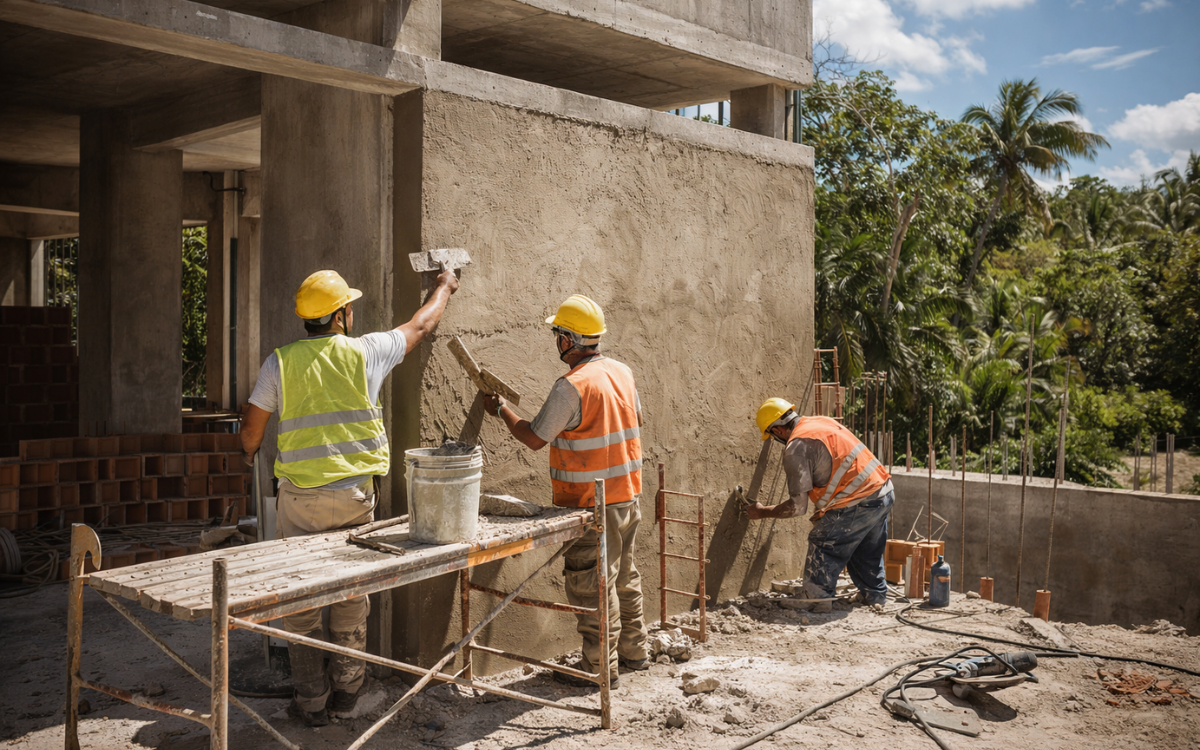
Walk through any design-focused neighborhood in Tulum — Aldea Zama, La Veleta, the Tulum Hotel Zone — and you will encounter the same smooth, matte, earth-toned walls on almost every building that takes architecture seriously. That finish is chukum, and it has become the defining material signature of contemporary Tulum architecture.
Chukum is not a trend. It is a traditional Mayan building material that has been used in the Yucatán Peninsula for centuries, recently rediscovered by architects and builders who recognized that its properties are uniquely suited to the tropical environment of the Riviera Maya. This article explains what chukum is, how it performs, what it costs, and whether it is the right finish for your project.
What is Chukum?
Chukum is a natural plaster made by combining lime with the sap extracted from the chukum tree (Havardia albicans), a native species of the Yucatán Peninsula. The sap acts as a natural binder and waterproofing agent, giving the finished plaster a distinctive hardness and water resistance that conventional lime plasters do not achieve.
The resulting material is applied in multiple coats directly onto concrete, masonry, or block walls and finished by hand. The surface texture ranges from very smooth to slightly textured depending on application technique. The color is naturally warm — a creamy, sandy off-white in its natural state — but chukum accepts pigments, and tinted versions produce the terracotta, ochre, grey, and pale pink tones common in Tulum's built environment.
Chukum is entirely natural. It contains no synthetic polymers, no cement, and no industrial additives. This is part of its appeal in an architectural culture that values authentic, locally-sourced, environmentally responsible materials.
Why Does Chukum Work So Well in Tulum?
The Riviera Maya's tropical climate is challenging for building materials. High humidity, intense heat, heavy seasonal rainfall, salt air in coastal zones, and exposure to underground moisture from the karst geology below — all of these conditions degrade conventional finishes over time.
Chukum performs exceptionally well in this environment for several reasons:
Natural waterproofing: The chukum sap creates a surface that repels water rather than absorbing it, making it resistant to the moisture penetration that causes cracking and spalling in conventional plaster. This is why chukum is used inside pools, fountains, and outdoor water features as well as on exterior walls.
Breathability: Unlike synthetic waterproofing membranes or polymer-modified plasters, chukum allows the wall assembly to breathe — moisture trapped within the wall can escape, preventing the build-up of pressure that causes finishes to delaminate.
Durability: Properly applied chukum is extremely hard and durable. Historic chukum-plastered structures throughout the Yucatán have survived centuries of tropical conditions. When maintained correctly, chukum walls in contemporary buildings perform for decades without requiring replacement.
Thermal comfort: The thermal mass of chukum-plastered concrete walls moderates interior temperatures — absorbing heat during the day and releasing it at night — reducing reliance on mechanical cooling.
How is Chukum Applied?
Chukum application is a skilled craft. The process typically involves: surface preparation (the substrate must be clean, stable, and free of any previous incompatible coatings), application of a scratch coat, application of one or more body coats, and final finishing by hand — burnishing, sponging, or troweling to achieve the desired surface texture.
The sap-lime mixture must be prepared correctly and applied within a specific working time. Curing is gradual and requires protection from direct sun and rain during the early stages. A properly executed chukum finish on an exterior wall typically takes 5–7 days from initial application to full cure.
Because the application technique directly determines the quality of the finish, the skill of the applicator matters enormously. PGA works with experienced chukum specialists — craftspeople who have applied the material on dozens of projects — to ensure consistent, high-quality results.
Chukum vs. Other Finishes: When to Choose Which
Chukum is not the right choice for every application or every budget. Here is a clear comparison with the other finishes most commonly used in Tulum:
Vs. Conventional painted render: Standard cement render with paint is significantly cheaper and faster to apply than chukum, but it does not have chukum's water resistance, durability, or visual character. In humid or wet applications (pools, outdoor showers, exterior walls exposed to driving rain) conventional render with paint will degrade much faster.
Vs. Microcement: Microcement is a modern alternative that achieves a similar smooth, matte surface. It is applied over a primer system and cures chemically rather than through a traditional craft process. Microcement is generally faster to apply and more consistent in color than chukum, but lacks the material authenticity and thermal performance of natural chukum.
Vs. Exposed concrete: Many contemporary Tulum buildings use board-formed or polished exposed concrete as a finish surface. This is architecturally very strong but requires excellent formwork, careful concrete mix design, and significant skill to execute well. Chukum and exposed concrete are often used together in the same building — concrete for primary structural surfaces, chukum for secondary walls and wet areas.
For a high-quality residential or hospitality project in Tulum, chukum is almost always the right choice for at least some surfaces — particularly pool interiors, outdoor showers, courtyard walls, and any exterior surface that will receive direct rain exposure.
Cost and Maintenance
Chukum costs more than conventional plaster finishes — typically 2–4 times the cost of standard cement render and paint, depending on surface area and the complexity of the application. For a private villa, the premium over conventional finishes might add USD $15,000–35,000 to the total construction cost. For most clients building in Tulum's mid-range and luxury segment, this investment is clearly justified by the material's durability, visual quality, and alignment with the market's design expectations.
Maintenance is straightforward. Chukum walls should be sealed with a natural wax or breathable sealant annually in exterior applications. Damage to specific areas — cracks from structural movement, impact damage — can be repaired and matched by an experienced applicator. Unlike painted surfaces, which require full repainting when they become unsightly, chukum can be repaired locally without visible repair lines if work is done by a skilled craftsperson.
PGA's architectural design services and construction management incorporate chukum specification and application management on most residential and hospitality projects in Tulum. If you are planning a project in the Riviera Maya and want to understand how chukum fits into your design and budget, contact Roberto Carli to discuss.
Want to take the next step?
→ Architectural Design Services
Contact Roberto Carli: info@robertocarlipga.com | +52 984 144 2963



contact us
if you have any suggestion or desire for cooperation, feel free to contact us via our contact details or contact form
Progetti Globali di Architettura
if you have any suggestion or desire for cooperation, feel free to contact us via our contact details or contact form